
Over the years, the industry hasn’t been short of doomsayers, with certain corners of the media and internet quick to turn even the most minor self-driving vehicle related incidents into a Terminator-style end-of-the-world catastrophe.
Recently however the industry has turned somewhat of a corner, with a number of high-profile deployments and industry developments proving that the rollout of Connected and Automated Mobility could actually have real societal, environmental and economic benefits.
Firstly, we saw Jeremy Clarkson, star of hit Amazon Prime series, Clarkson’s Farm, waxing lyrical about how autonomous vehicles are helping improve productivity and reduce costs for farmers.
After attending an exhibition at Birmingham’s NEC, the Top Gear host-turned-farmer drove to Belgium and the Netherlands to visit farmers who were reaping the benefits of deploying autonomous tractors, seeding robots and fertiliser spraying drones.
The tour – which included a visit to see a Dutch potato farmer who had transformed his family farm by shifting from traditional, instinct-based farming to an entirely data-driven, scientific operation – proved such an eye opener that Clarkson, who has traditionally been one of the most vocal critics of self-driving vehicles, become something of a CAM hero.
In fact, Clarkson is so personally invested in the technology that CAM goes on to become a key theme of the series, with his Cotswold farm going on to trial and deploy an AgBot T2, a fully-autonomous robot designed to cultivate soil and prepare seedbeds and a FarmDroid F20 capable of carrying out precision seeding and weeding, enabling him to test growing niche crops such as onions and beetroot.
Despite a few hiccups, the trials prove a success and Clarkson is totally bowled over by the “AgriBots”, resulting in one of the industry’s most vocal critics becoming one of its biggest ambassadors. Let’s not forget that he is also one of the nation’s most influential columnists and farmers, marking a dramatic change in public discourse.
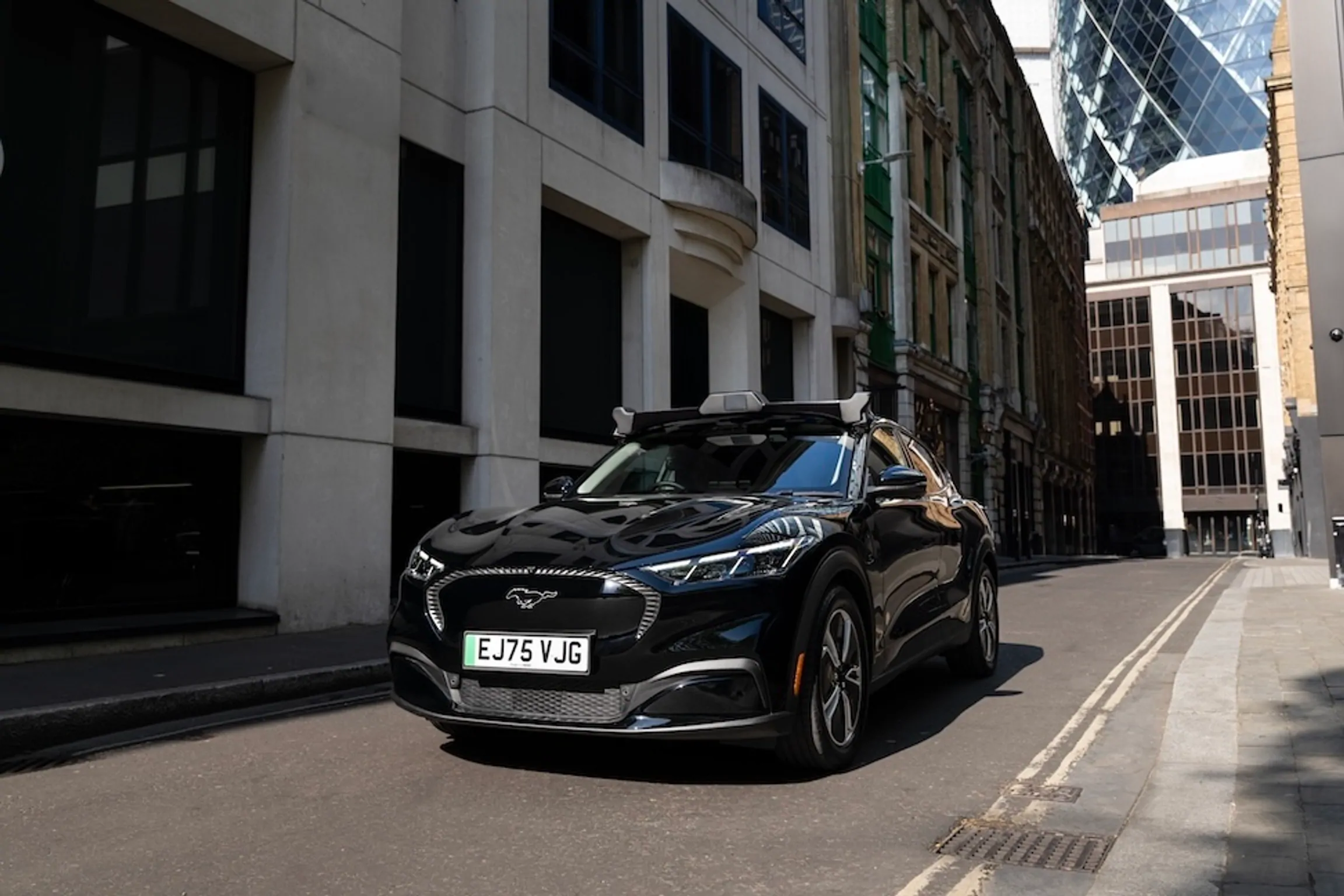
Secondly, we finally had the eventual rollout of Uber and Wayve’s robotaxis on London’s streets, something it feels as though the industry has been building up to for years, despite it only being announced in June 2025.
At the time of writing, the trials have been underway a week and the reception has been largely positive. Wayve, the posterchild of the UK CAM sector which is a key player in the project alongside Uber, has helped show the world just how brilliant a CAM ecosystem we have and has been singled out for praise by Transport Secretary Heidi Alexander MP, who told The Guardian following the launch: “This is a major milestone for the future of transport in London, as British innovation brings this technology onto our roads and gives passengers more choice.
“Today’s announcement further cements Wayve’s status as a technology trailblazer here in the UK and highlights how British innovation is helping drive investment and growth in transport.”
Finally, we had the announcement from the UK Government, Innovate UK and Zenzic that there will be continued investment in the country’s next generation of CAM innovators through the £150million CAM Pathfinder competition.
Among the businesses to have secured funding from the latest competition is Gravis Robotics, which has developed pioneering software enabling excavators to become fully autonomous vehicles.
The project is seeking to demonstrate how even the most traditional of industries such as construction could be transformed by the CAM revolution and just a week after the CAM Pathfinder announcement, the company announced it had secured a further $200m from investment giant BlackRock, demonstrating the potential for such solutions to be scaled not just nationwide but globally.
Naturally, the rollout of robotaxis has felt the wrath of unions who have reservations over jobs, and no doubt we will hear similar concerns as other industries begin to embrace and deploy CAM solutions in their respective fields, however for every robotaxi on UK roads, there are a dozen AgriBots or autonomous HGVs helping safeguard the UK’s food security, keeping goods and people moving through our airports and ports or improving connectivity across hospital and education campuses.
While the industry will no doubt continue to face its fair share of comms challenges, be it addressing safety concerns in the event of an accident, building trust or simply helping people overcome “the fear of the unknown”, if recent industry developments are anything to go by, then with the right messaging, ambassadors and execution, there is no reason why the industry can’t become the next darling of UK Plc.
We already have some fantastic innovators who are shouting from the rooftops about their work, from Aurrigo to Oxa and Wayve, however behind those are a whole host of software developers, sensor developers and manufacturers who are helping underpin their solutions.
The potential for the industry is huge, and we have positive stories and case studies in abundance. To keep the momentum going, we just need the industry to continue flying the flag for UK CAM and championing those successes at any given opportunity.
Bryce Wilcock, Account Director at Creo Communications, has worked on dozens of CAM projects across the UK over the past four years, as well as providing strategic PR support to industry body, Zenzic. Interested in discussing how your organisation could benefit from working with Creo? Speak to the team today!